Flea and tick home treatment addresses severe Gulf Coast pest activity fueled by high humidity and long, warm seasons. The humid subtropical environment in neighborhoods like The Heights, Montrose, and River Oaks…
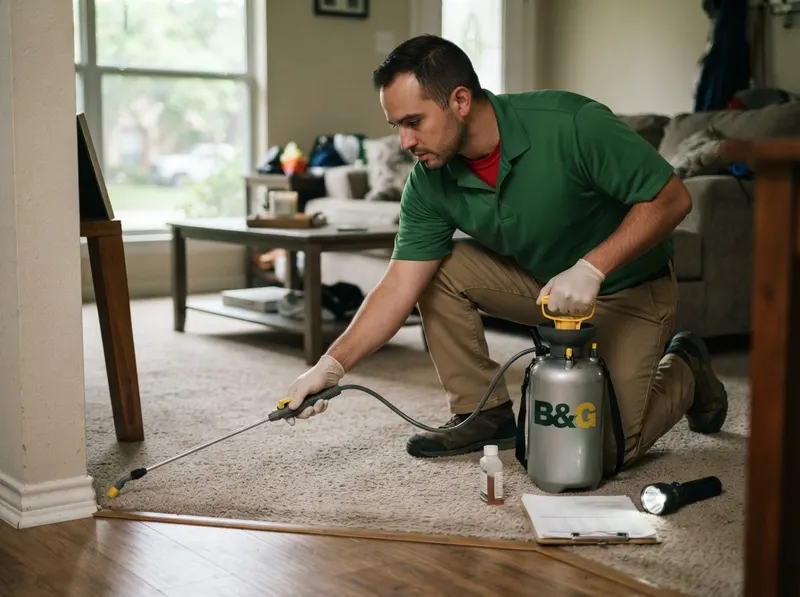
Flea and tick home treatment addresses severe Gulf Coast pest activity fueled by high humidity and long, warm seasons. The humid subtropical environment in neighborhoods like The Heights, Montrose, and River Oaks creates continuous reproduction cycles for fleas and ticks, where pupae remain protected inside carpet fibers and crawlspaces for months. A retail canister spray often fails because it only eliminates hatched adults, leaving unseen pupae and eggs intact. Professional treatment combines an adulticide to stop biting insects within hours and an insect growth regulator (IGR) that binds to juvenile hormone receptors, stopping larvae from shedding their exoskeletons into reproducing adults.
Outdoor habitats require equal attention in heavily vegetated communities such as Memorial, Kingwood, and Oak Forest. Shaded turf under live oaks, soil lines along pine straw beds, and the ground beneath deck pilings harbor questing ticks waiting to attach to domestic animals. A liquid residual barrier applied across turf, perimeter shrub lines, and crawlspace foundations establishes an exterior barrier that limits pests from migrating back indoors. For properties near flood-retention zones or water bodies in Meyerland and Clear Lake, treatment adheres to strict environmental standards to protect non-target aquatic life while neutralizing parasites in perimeter resting sites.
The process follows four distinct steps to ensure continuous disruption of the pest cycle. First, occupants vacuum all interior rugs, baseboards, and pet resting pads to induce adult emergence from pupal cases through mechanical vibration. Second, technicians execute a uniform floor application using low-odor formulations across carpets, area rugs, tile seams, and sub-furniture clearings. Third, exterior shade zones and foundation perimeters receive directed band applications to eliminate perimeter host harbors. Fourth, the treated indoor areas dry completely for two to three hours before residents and pets return. Structural treatments work best alongside veterinary-approved topical or oral parasite prescriptions for household pets, preventing reintroduced parasites from establishing a new indoor population.
Every job gets a firm, written price after a free on-site visit.
Tell us about your flea & tick home treatment job in Houston and we'll send a clear, written quote, usually the same day.
 Bayou Cedar Pest Control